


New Generation of Wearable Devices: From Data Collection to Health Prediction
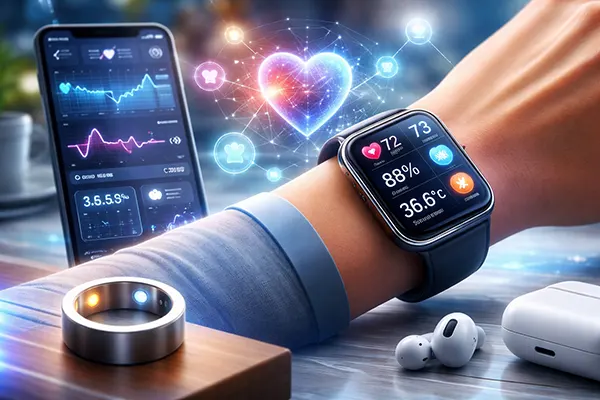
Wearable devices have moved far beyond simple step counters and heart rate monitors. By 2025, they have become sophisticated health companions capable of collecting complex biometric data and transforming it into meaningful health insights. Advances in sensor technology, artificial intelligence, and medical research have reshaped how individuals monitor their physical condition, prevent illness, and interact with healthcare professionals on a daily basis.
Evolution of Wearable Data Collection Technologies
Modern wearable devices rely on a dense network of sensors that continuously measure physiological signals such as heart rate variability, blood oxygen saturation, skin temperature, respiratory rate, and physical activity patterns. Compared to earlier generations, current devices use medical-grade optical sensors and improved electrode designs, which significantly reduce measurement errors caused by motion or external conditions.
Another major shift is the integration of multi-sensor fusion. Instead of analysing isolated data points, wearables now combine signals from accelerometers, gyroscopes, optical sensors, and bioimpedance modules. This approach allows devices to distinguish between similar physiological states, such as physical stress versus emotional stress, with far greater accuracy.
Data collection has also become more energy-efficient. Low-power processors and adaptive sampling techniques enable continuous monitoring without frequent charging. This makes long-term data tracking realistic, which is essential for identifying subtle health trends that develop over weeks or months rather than hours.
Accuracy, Privacy, and Data Reliability
Accuracy remains a critical factor for wearable adoption in healthcare contexts. Manufacturers increasingly validate their devices through clinical trials and comparisons with hospital-grade equipment. This validation process helps ensure that collected data can support meaningful health decisions rather than serving only as general wellness indicators.
Equally important is data privacy. By 2025, most reputable wearable brands use end-to-end encryption and on-device data processing to minimise the exposure of sensitive health information. Users are given clearer control over what data is shared, with whom, and for what purpose, aligning with strict data protection regulations in the UK and EU.
Reliability is further enhanced through anomaly detection systems embedded directly into devices. These systems automatically flag inconsistent readings caused by poor sensor contact or environmental interference, ensuring that long-term datasets remain clean and clinically relevant.
From Raw Data to Meaningful Health Insights
Collecting data is only the first step. The real value of next-generation wearables lies in their ability to interpret complex datasets and translate them into understandable health insights. Advanced algorithms analyse baseline patterns unique to each user, allowing deviations to be detected early.
Machine learning models now identify correlations between multiple biomarkers that would be difficult for a human to recognise without extensive medical training. For example, changes in sleep stages combined with heart rate variability and skin temperature can indicate early signs of infection or chronic fatigue.
These insights are presented in a user-friendly manner, avoiding medical jargon while still remaining scientifically grounded. Clear visual summaries and contextual explanations help users understand what their data means and when professional medical advice may be appropriate.
Role of Artificial Intelligence in Health Analysis
Artificial intelligence plays a central role in transforming wearable data into predictive insights. Instead of relying on static thresholds, AI models continuously learn from the user’s historical data, refining predictions as more information becomes available.
In 2025, AI-driven wearables can forecast potential health risks such as cardiovascular strain, sleep disorders, or overtraining injuries. These predictions are probabilistic rather than diagnostic, offering early warnings that encourage preventive action rather than replacing clinical assessment.
The most advanced systems also adapt recommendations based on user behaviour. If a person consistently ignores certain alerts, the system adjusts how and when notifications are delivered, improving long-term engagement without overwhelming the user.
Predictive Health Monitoring and Preventive Care
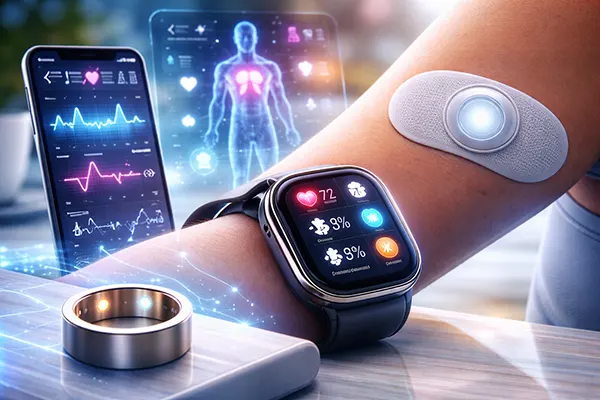
Predictive health monitoring represents a fundamental change in how individuals manage their wellbeing. Wearables now support a proactive approach, focusing on prevention rather than reaction. Continuous trend analysis allows potential issues to be identified before symptoms become noticeable.
For people managing chronic conditions, wearables offer an additional layer of safety. Long-term monitoring helps detect gradual changes that may indicate disease progression or reduced treatment effectiveness, supporting earlier intervention.
Healthcare providers increasingly recognise the value of wearable-generated data. When shared responsibly, this information can support more informed consultations and personalised treatment strategies, especially in remote or hybrid care models.
Integration with Healthcare Systems and Professionals
Integration between wearable devices and healthcare systems has improved significantly. Standardised data formats allow information from consumer devices to be reviewed alongside clinical records, reducing fragmentation and misinterpretation.
Medical professionals use wearable data primarily to observe trends rather than isolated readings. This longitudinal perspective provides deeper insight into a patient’s everyday condition, which traditional check-ups may fail to capture.
As regulatory frameworks continue to evolve, wearable data is expected to play an even larger role in preventive medicine. Clear guidelines help ensure that data supports medical decision-making while maintaining ethical standards and patient trust.