


Microgrids for Residential Districts: How Local Energy Reduces Urban Pressure
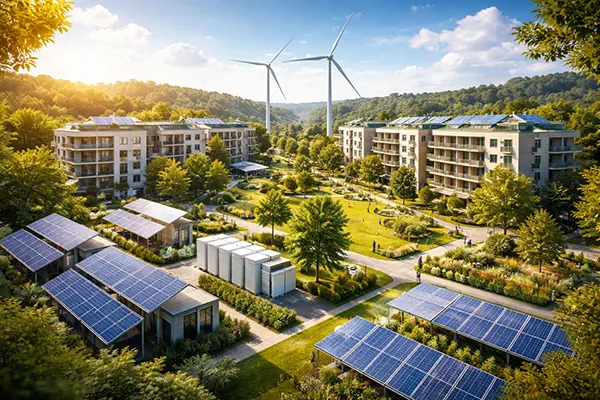
Urban energy systems in 2026 are under increasing strain due to population growth, electrification of transport, and rising demand for stable power supply. Against this background, microgrids are becoming a practical solution for residential districts, allowing communities to generate, store, and manage energy locally. This approach does not replace centralised infrastructure but complements it, improving resilience and reducing peak loads on city networks.
What Microgrids Are and Why Cities Need Them
A microgrid is a localised energy network that can operate independently or in conjunction with the main grid. It typically includes renewable generation sources such as solar panels, energy storage systems, and intelligent control software. In residential districts, these systems are often installed at building or neighbourhood level, allowing energy to be produced and consumed close to where it is needed.
In modern cities, electricity demand peaks are becoming more frequent due to electric vehicles, heat pumps, and smart home devices. Traditional grids were not designed for such dynamic loads, which leads to congestion and higher operational costs. Microgrids help smooth these fluctuations by balancing supply and demand locally before energy is drawn from the wider network.
Another important factor is resilience. Extreme weather events and infrastructure failures can disrupt centralised systems. Microgrids, especially those with battery storage, can continue operating in island mode, providing essential power to homes and critical services even during outages.
Key Components of a Residential Microgrid
The foundation of any microgrid is distributed generation. In residential areas, rooftop solar remains the most common option due to falling installation costs and improved efficiency of photovoltaic panels. In some cases, small wind turbines or shared community energy assets are also used.
Energy storage plays a crucial role in ensuring stability. Lithium-ion batteries are still dominant in 2026, although new technologies such as sodium-ion and solid-state batteries are gradually entering the market. These systems store excess energy during low demand periods and release it when consumption increases.
Smart control systems tie everything together. Using real-time data and predictive algorithms, they optimise when to store, use, or export electricity. This reduces waste and ensures that the microgrid operates efficiently without constant human intervention.
How Microgrids Reduce Load on Urban Infrastructure
One of the main benefits of microgrids is their ability to reduce pressure on central energy systems. By generating electricity locally, residential districts decrease their reliance on long-distance transmission, which is often associated with energy losses and bottlenecks.
During peak hours, microgrids can supply a significant portion of local demand without drawing heavily from the main grid. This reduces the need for expensive infrastructure upgrades such as new substations or transmission lines. For city authorities, this translates into lower capital expenditure and more efficient use of existing assets.
Microgrids also enable demand response strategies. Households can adjust consumption patterns automatically based on price signals or grid conditions. For example, charging an electric vehicle or running high-energy appliances can be shifted to off-peak periods, easing strain on the overall system.
Impact on Energy Costs and Sustainability
From a financial perspective, microgrids can help stabilise energy costs for residents. By producing part of their own electricity, households are less exposed to price volatility in wholesale markets. Over time, this leads to more predictable utility bills.
Environmental benefits are equally significant. Local generation based on renewable sources reduces reliance on fossil fuels and lowers greenhouse gas emissions. In dense urban areas, even a modest increase in local renewable capacity can have a measurable impact on air quality.
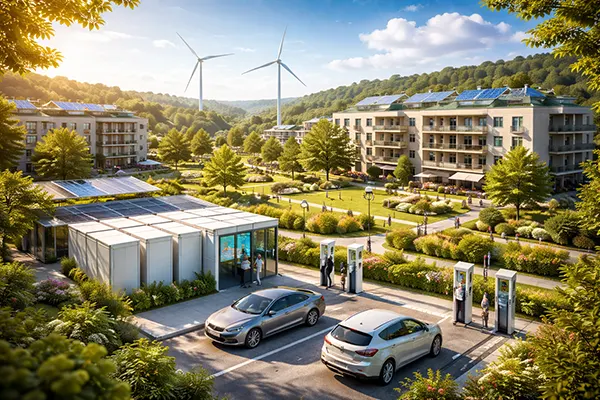
In addition, microgrids support the integration of electric mobility. Charging stations connected to local energy systems can operate more efficiently, especially when paired with battery storage. This reduces the risk of overloading city grids as electric vehicle adoption continues to grow.
Challenges and Future Development of Microgrids
Despite clear advantages, microgrids face several challenges. One of the main barriers is the initial investment required for installation. Although costs have decreased, setting up generation, storage, and control systems still requires significant capital, particularly for large residential developments.
Regulatory frameworks also vary across regions. In some countries, policies still favour centralised utilities, making it difficult for communities to sell excess energy or operate independently. However, by 2026, many governments are introducing reforms to encourage decentralised energy solutions.
Technical complexity is another factor. Designing and managing a microgrid requires expertise in energy engineering, data systems, and cybersecurity. As these systems become more widespread, standardisation and user-friendly interfaces are expected to simplify deployment and operation.
The Role of Innovation in Scaling Microgrids
Advances in digital technology are accelerating the adoption of microgrids. Artificial intelligence and machine learning improve forecasting accuracy, allowing systems to anticipate demand and adjust energy flows accordingly. This leads to better performance and higher efficiency.
New business models are also emerging. Energy communities, where residents collectively invest in and manage local energy systems, are becoming more common. These models distribute costs and benefits more evenly, making microgrids accessible to a wider audience.
Looking ahead, integration with smart cities will play a decisive role. Microgrids will not operate in isolation but as part of interconnected urban systems, including transport, heating, and data networks. This holistic approach will help cities handle growing energy demands while maintaining reliability and sustainability.