


Battery-Free Ambient IoT Sensors: How Billions of Devices Could Run on Environmental Energy

Imagine a food package reporting its temperature, a warehouse shelf detecting missing products or a building monitoring humidity without anyone replacing batteries. Ambient Internet of Things (Ambient IoT) technology is bringing these possibilities closer to everyday use. By collecting tiny amounts of energy from radio waves, light, heat and movement, miniature sensors can perform simple tasks without conventional batteries. In 2026, improvements in low-power electronics, wireless communication and international standards are making this approach increasingly practical. The ambition is to connect billions of ordinary objects while reducing maintenance, electronic waste and the cost of collecting information from the physical world.
How Ambient IoT Sensors Work Without Conventional Batteries
Traditional connected devices usually depend on batteries, wired electricity or regular charging. Ambient IoT takes a different approach by capturing energy already available in the surrounding environment. This process, known as energy harvesting, allows a sensor to collect small quantities of electricity and use them for measurements, basic processing and wireless communication. Unlike a smartphone or smartwatch, an Ambient IoT sensor is designed to complete relatively simple tasks using extremely little power. It might identify an object, detect a temperature change or send a brief message rather than maintain a permanent wireless connection.
The amount of energy available depends on the surroundings. Indoor light can power a miniature photovoltaic cell, while radio-frequency harvesting circuits capture energy from suitable wireless transmissions. Temperature differences and mechanical movement offer other possibilities. A sensor attached to industrial equipment might benefit from vibration, whereas one installed near a window could collect energy from daylight. However, these sources are not equally effective in every situation. A dark storage area may provide insufficient light, and ordinary radio signals can deliver very little usable energy at greater distances. Successful products therefore match their energy source to their intended working conditions.
Many battery-free sensors also include a capacitor, which temporarily stores harvested electricity until enough is available to perform an operation. A device may remain inactive while collecting energy, wake briefly to take a measurement, transmit a small amount of information and then return to a low-power state. Other designs use backscatter communication, changing the reflection of an incoming radio signal instead of generating a conventional transmission. These methods help conserve energy, although they introduce restrictions on communication range and operating frequency. Battery-free operation does not mean unlimited electricity; it means designing every function around a very small and sometimes unpredictable energy supply.
Energy Harvesting Methods and Ultra-Low-Power Electronics
Four principal energy sources are particularly relevant to Ambient IoT: radio waves, light, heat and motion. Radio-frequency harvesting is attractive for product labels and tracking tags because the receiving components can be extremely small. Photovoltaic harvesting is suitable for locations with predictable illumination, including certain offices, shops and industrial premises. Thermoelectric devices use differences in temperature, while piezoelectric and electromagnetic harvesters can convert certain forms of movement or vibration into electricity. Some products combine several sources to improve reliability, but every additional component affects their dimensions, manufacturing cost and practical installation requirements.
Energy-efficient electronics are just as important as the harvesting mechanism. Modern sensing chips can spend most of their time in deep sleep, activating only essential circuits when sufficient energy becomes available. Instead of transmitting a detailed report every second, a device may send a short identifier, a temperature reading or an alert when a specified condition changes. The sensor, processor and wireless circuit must be carefully coordinated so that communication does not consume more electricity than harvesting can replenish. This explains why early Ambient IoT applications concentrate on identification and occasional measurements rather than demanding continuous video, audio or complex calculations.
The distinction between Ambient IoT and familiar technologies such as RFID is also important. Passive RFID tags have long operated without batteries, drawing energy from nearby readers and returning identification information. Ambient IoT builds on similar low-energy principles while supporting broader sensing and communication possibilities. Some devices can report environmental conditions or interact with wireless infrastructure across a wider operating area. Others remain relatively simple identification tags. The International Telecommunication Union’s 2025 report on ambient power-enabled IoT recognises both established RFID technologies and newer energy-harvesting sensors as parts of this developing field. The result is an evolution of proven techniques rather than an entirely new physical principle.
Where Battery-Free Sensors Are Already Making a Difference
Supply chain management is among the most promising commercial applications because retailers and logistics companies handle enormous numbers of products, containers and transport assets. Conventional electronic trackers are often too expensive or maintenance-intensive to attach to individual low-value items. Battery-free labels could make it more practical to monitor goods throughout warehouses, distribution centres and shops. Depending on their design, these sensors can provide identification, movement or environmental information whenever suitable wireless coverage is available. Businesses can then identify misplaced stock, investigate storage conditions and reduce the manual work involved in checking inventory. The commercial advantage comes from combining inexpensive sensing devices with infrastructure capable of collecting and interpreting their data.
Food distribution offers a particularly useful example. Fresh produce, dairy products and pharmaceuticals can be affected by unsuitable temperatures during storage and transport. A battery-free temperature sensor attached to a package or reusable container could provide additional evidence about the conditions it experiences. Such readings may help identify refrigeration problems before an entire shipment is affected. Nevertheless, a sensor cannot automatically guarantee product safety or replace established temperature-control procedures. Measurements must be sufficiently accurate, collected at appropriate intervals and associated with the correct product. Coverage gaps, calibration requirements and regulatory obligations remain important considerations for any business using these systems.
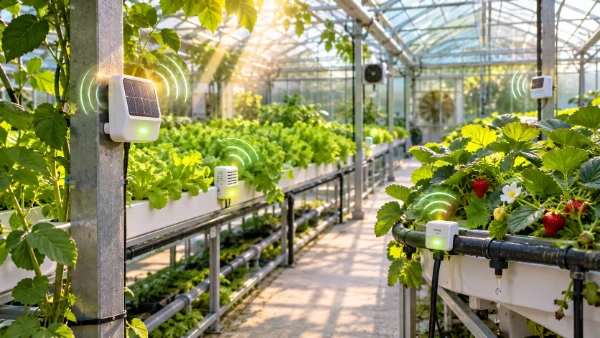
Ambient IoT also has potential in buildings, manufacturing and environmental monitoring. Small sensors could help detect moisture around pipes, monitor changes in machinery or identify whether equipment has moved from its assigned location. In buildings where replacing hundreds of batteries would be inconvenient, energy-harvesting devices may reduce routine maintenance. Agricultural uses could include selected soil or greenhouse measurements, provided adequate energy and connectivity are available. These applications vary considerably in maturity, and not every proposed use has reached commercial deployment. The strongest initial opportunities are generally those requiring small amounts of information rather than continuous, high-power monitoring.
Real Commercial Developments and the Role of 5G Advanced
Wiliot provides a practical example of battery-free sensing beyond traditional RFID. Its IoT Pixels use harvested radio-frequency energy and Bluetooth communication to identify and monitor physical items. The company’s third-generation technology, introduced in January 2026, supports dual-band energy harvesting and targets supply chain applications involving product location, movement and environmental conditions. Wiliot describes energising distances of up to 40 metres for its sub-1 GHz arrangement, although actual performance depends on the equipment and installation. These devices still require compatible wireless infrastructure to deliver dependable information. They demonstrate how eliminating batteries from individual labels can reduce maintenance while transferring some of the power and connectivity requirements to surrounding equipment.
International standardisation is another significant development. The 3rd Generation Partnership Project, known as 3GPP, incorporated Ambient IoT specifications into Release 19, part of the continuing evolution of 5G Advanced. Its technical work addresses communication between extremely low-power devices and network equipment, including how information can be transmitted, received and managed. The January 2026 version of 3GPP TS 22.369 describes devices powered through energy harvesting, either without batteries or with limited electrical storage such as capacitors. Other Release 19 specifications cover radio transmission and communication procedures. These developments create a more consistent technical foundation for future equipment, although publishing specifications does not mean compatible systems are immediately available everywhere.
The potential scale is considerable because everyday objects vastly outnumber conventional connected electronics. Retail packaging, industrial components and reusable containers could eventually become sources of useful digital information. However, the prospect of billions of Ambient IoT devices should be understood as a long-term possibility rather than an established deployment figure. Manufacturers must achieve low unit costs, reliable communications and straightforward integration with existing business systems. Network operators and equipment suppliers also need to support large populations of devices without creating excessive interference or infrastructure expenses. Progress in 2026 is therefore best measured through working commercial products, maturing standards and practical deployment experience rather than ambitious forecasts alone.
What Must Happen Before Ambient IoT Can Reach Billions of Objects?
Energy availability remains one of the largest obstacles to widespread adoption. A sensor located near a suitable radio transmitter or under reliable lighting may perform well, while an identical device placed inside metal packaging or a poorly illuminated warehouse could struggle. Materials, distance, orientation and changing environmental conditions all influence energy harvesting and communication. Engineers must therefore establish realistic operating limits before promising maintenance-free performance. The useful lifetime of a battery-free sensor can also depend on physical damage, ageing components and environmental exposure. Removing a disposable battery eliminates one common failure point, but it does not make the complete device indestructible.
Cost is equally important. When sensors are deployed in thousands or millions, even a small difference in unit price can substantially affect the budget. Businesses must consider more than the price of the label itself: readers, energising equipment, installation, data processing, maintenance and integration all contribute to the overall expense. Battery-free devices may reduce expenditure on replacement batteries and servicing, particularly when physical access is difficult. Yet those savings must be compared with the cost of supporting infrastructure. For an inexpensive product used only briefly, a sophisticated electronic label may still be difficult to justify. Reusable containers and valuable goods can offer a clearer financial case because sensors provide information over repeated journeys.
Security, privacy and environmental impact also deserve attention. A large network of identifiable objects could reveal commercially sensitive information about inventory, shipments or customer behaviour if data were collected without suitable controls. Authentication, protected communication and appropriate limits on data collection are therefore essential. From an environmental perspective, smaller battery-free electronics could help reduce demand for disposable batteries and the associated replacement work. However, producing and disposing of billions of electronic labels would still consume materials and generate waste. The overall environmental benefit depends on manufacturing methods, device lifespan, collection arrangements and whether the information gathered genuinely reduces losses or resource consumption elsewhere.
The Future of Ambient IoT Beyond 2026
Further advances are likely to come from improved energy-harvesting circuits, lower-power processors and more affordable wireless components. Better coordination between sensors and surrounding equipment could allow devices to collect useful information under conditions that currently restrict their operation. Hybrid designs combining light and radio-frequency harvesting may also improve reliability in environments where energy availability changes throughout the day. At the same time, compatibility between different manufacturers will matter increasingly. Businesses are more likely to invest in large deployments when they can replace equipment, expand coverage and connect information systems without depending entirely on one supplier’s technology.
Artificial intelligence could make large-scale sensor information more useful, but its principal role will often be outside the battery-free device itself. Instead of asking miniature sensors to perform demanding calculations, businesses can analyse their measurements using nearby computers or remote services. For example, software might compare temperature readings from thousands of transport containers, identify unusual patterns and alert staff when conditions require investigation. This arrangement preserves the simplicity of individual sensors while allowing more sophisticated decisions at the wider system level. The value of Ambient IoT will depend not merely on collecting more measurements, but on turning reliable information into timely, practical actions.
By the end of 2026, Ambient IoT has progressed beyond laboratory demonstrations, with commercial battery-free products and formal 5G Advanced specifications establishing a foundation for further development. Nevertheless, universal adoption remains some distance away. The technology is most suitable where measurements are brief, electricity requirements are extremely low and supporting infrastructure makes economic sense. Battery-powered sensors will continue to serve applications requiring greater processing capacity, longer independent communication ranges or predictable continuous operation. The longer-term opportunity is to connect ordinary objects that previously could not justify their own batteries, making physical operations easier to monitor without creating an equally enormous battery-maintenance problem.