


What Wi-Fi 8 (802.11bn) Means for Everyday Connectivity in the Coming Years
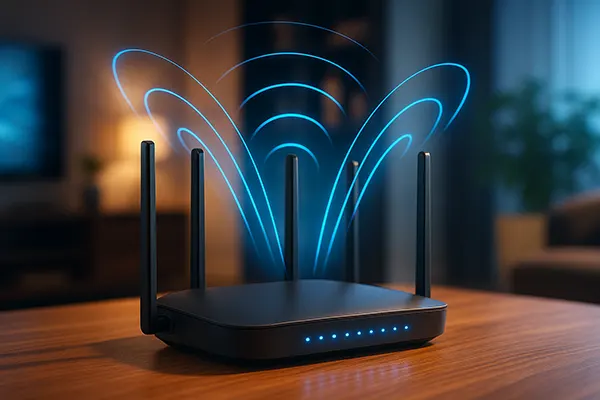
Wi-Fi 8, officially known as 802.11bn, is shaping up to become the next major step in wireless networking by the end of the decade. It is being designed to handle far higher data loads, ensure stable performance in dense environments, and support an expanding ecosystem of connected devices. As global demand for seamless connectivity grows, this new standard aims to deliver greater efficiency, reduced latency, and enhanced spectrum use. The following analysis summarises what users can reasonably expect from Wi-Fi 8 based on current technological progress, public specifications in development, and industry trends projected to 2025–2030.
Core Technical Principles Behind Wi-Fi 8
The development of Wi-Fi 8 focuses on improving spectral efficiency, allowing wireless networks to transmit significantly more data across the same radio bands. Early drafts from the IEEE task group working on 802.11bn highlight enhancements to multi-link operations, enabling devices to use several frequency channels simultaneously. This approach should reduce congestion in busy areas and provide consistent throughput even when multiple devices compete for access.
Another important direction is the expansion of advanced MU-MIMO configurations. Where Wi-Fi 6 and Wi-Fi 7 already improved multi-user capabilities, Wi-Fi 8 aims to increase the number of supported spatial streams and refine scheduling algorithms. These improvements are expected to benefit both home and enterprise environments, particularly where high-resolution video, VR devices and AI-powered applications generate substantial demand.
Energy performance is also being prioritised. Manufacturers plan to introduce more efficient wake-up mechanisms and adaptive transmission strategies. These innovations should help battery-powered devices maintain longer operational cycles without affecting the quality of their wireless connection.
Performance Expectations and Real-World Scenarios
Although exact figures will only be confirmed closer to full certification, early estimates suggest that Wi-Fi 8 could offer multi-gigabit speeds with reduced latency under real-world conditions. This would support next-generation services such as cloud-based productivity tools, online education systems with real-time interactivity, and increasingly sophisticated smart-home installations. In crowded residential buildings, improved interference management may finally allow users to rely on wireless networks without unpredictable drops during peak hours.
Enterprises may see even greater benefits. Offices with dozens of connected devices per employee—laptops, wearables, sensors, and collaborative equipment—require networking systems capable of handling dense traffic patterns. Wi-Fi 8’s planned efficiency upgrades should make this more manageable, reducing delays and improving the predictability of data flows.
Public places such as transport hubs, stadiums and educational campuses are expected to adopt Wi-Fi 8 once infrastructure becomes commercially viable. The standard’s enhanced ability to use multiple bands concurrently can help maintain stable access for thousands of devices operating in the same space.
Impact on Smart Homes and Emerging Consumer Technologies
The global smart-home market is expanding rapidly, with an increasing range of appliances and sensors relying on continuous wireless connectivity. Wi-Fi 8 is positioned to accommodate this expansion by offering more consistent performance for devices that work simultaneously. Refrigerators, thermostats, security systems, voice assistants, and household robots will be able to communicate with minimal interruption, even when bandwidth is heavily used by laptops or entertainment systems.
Augmented and virtual reality applications are another area set to benefit from Wi-Fi 8. These technologies require extremely low latency and high data rates to function smoothly. The efficiency improvements planned for 802.11bn are expected to minimise delays, enabling more stable experiences for users who rely on cloud rendering or high-definition wireless streaming.
Gaming enthusiasts may notice improvements due to more predictable latency patterns. While speed is important, stability is often a greater challenge for competitive online gaming. With better scheduling techniques and more robust interference handling, Wi-Fi 8 should deliver a more reliable environment for interactive entertainment.
Device Compatibility and Upgrade Considerations
As manufacturers gradually roll out Wi-Fi 8-compatible routers and client devices, users will need to ensure that both ends of the connection support the standard. Backward compatibility remains a core principle of IEEE development, meaning older devices will still function on Wi-Fi 8 routers, albeit without accessing new capabilities. This ensures a smooth transition as households and organisations update their equipment.
The first consumer-grade routers supporting preliminary Wi-Fi 8 features are expected to appear closer to 2027, with full-standard products following certification. For many users, upgrading will become relevant once their current equipment reaches performance limitations or when new technologies—such as advanced AR tools—make higher specifications essential.
Cost will also influence adoption rates. Early hardware is usually more expensive due to new chipsets and manufacturing complexity. Prices typically decrease after mass production begins, and this pattern is likely to repeat with Wi-Fi 8. Users considering long-term upgrades may find it beneficial to plan around these market cycles.

Security Developments Expected in Wi-Fi 8
Security remains an essential aspect of every new Wi-Fi generation, and Wi-Fi 8 is projected to introduce strengthened cryptographic methods alongside more advanced identity management. The standard is expected to integrate improvements from WPA3 while expanding protection against emerging attack vectors such as spoofing, deauthentication attempts and unauthorised network access.
One of the anticipated enhancements includes more efficient encryption handshakes. These improvements aim to shorten connection times without weakening data protection. This is especially relevant for environments with frequent short-range data exchanges, such as industrial IoT systems and wearable devices.
Network administrators may also benefit from more intelligent policy enforcement. Wi-Fi 8’s increased device awareness allows for refined control over priority levels, access permissions and bandwidth allocation. These tools will help maintain safe and stable operation across mixed-use environments where personal and professional devices coexist.
How Users Can Prepare for the Transition
For most users, there is no immediate need to replace existing equipment, as Wi-Fi 6 and Wi-Fi 7 remain capable solutions for current applications. However, staying informed about router developments and chipset announcements can help users make timely decisions when Wi-Fi 8 devices become more widely available. Keeping an eye on firmware support and manufacturer updates will also be essential.
Organisations planning long-term infrastructure upgrades may benefit from assessing their projected networking needs over the next five to ten years. This includes evaluating the number of connected devices, anticipated data volumes and required service continuity. Early planning can ensure that upcoming transitions are smooth and cost-efficient.
Understanding the capabilities and limitations of Wi-Fi 8 will help users adopt new technologies with confidence. As standards mature and production scales up, the industry is likely to release more detailed specifications. These will provide clearer guidance on how households and businesses can gain the most value from the next generation of wireless connectivity.