


Floating Solar Power Plants: Benefits, Risks and Real-World Projects
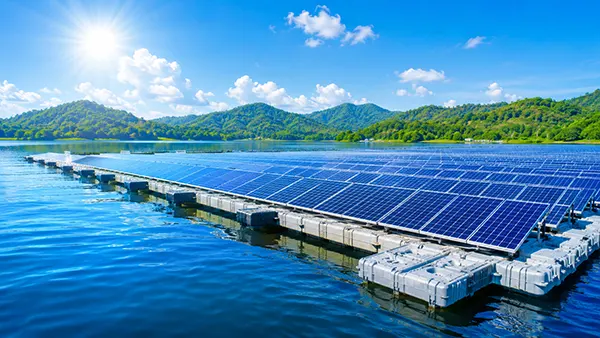
Floating solar power plants have moved from experimental engineering concepts to large-scale energy facilities used across Asia, Europe and North America. Governments and energy companies increasingly place photovoltaic panels on reservoirs, lakes, quarry ponds and industrial water bodies to address land shortages and support low-carbon electricity production. By 2026, floating photovoltaic systems are no longer limited to pilot schemes. Several countries now operate projects generating hundreds of megawatts of electricity, while manufacturers continue improving anchoring systems, corrosion protection and energy efficiency.
Why Floating Solar Power Plants Are Expanding Worldwide
One of the main reasons for the rapid growth of floating solar technology is the limited availability of land suitable for large renewable energy installations. Traditional solar farms require extensive areas that may otherwise be used for agriculture, housing or industrial activity. Floating systems use existing water surfaces, allowing energy production without occupying valuable land resources. Countries with dense populations, including Japan, Singapore and South Korea, have accelerated investments precisely because land costs remain extremely high.
Another important factor is operational efficiency. Solar panels installed above water generally operate at lower temperatures than equivalent land-based installations. Water naturally cools the surrounding environment, helping panels maintain stronger electrical performance during hot weather. Studies from operational projects indicate efficiency improvements of between 5% and 15% depending on climate conditions, panel type and local weather patterns. This thermal advantage has become one of the strongest commercial arguments for investors considering floating solar infrastructure.
Reservoir operators also benefit from reduced water evaporation. In dry regions, floating photovoltaic arrays partially shade water surfaces, limiting evaporation losses during summer months. This is particularly valuable for drinking water reservoirs, hydroelectric facilities and irrigation systems. In India and parts of the Middle East, authorities increasingly evaluate floating solar projects not only as energy assets but also as water conservation tools capable of supporting long-term environmental management strategies.
Engineering and Infrastructure Behind Floating Solar Systems
Modern floating solar stations rely on specialised buoyancy systems designed to withstand wind, waves, temperature fluctuations and changing water levels. Most installations use high-density polyethylene floats because the material resists ultraviolet radiation, corrosion and chemical exposure. Engineers connect the floating units into modular structures capable of supporting thousands of photovoltaic panels while maintaining flexibility during storms and seasonal water movement.
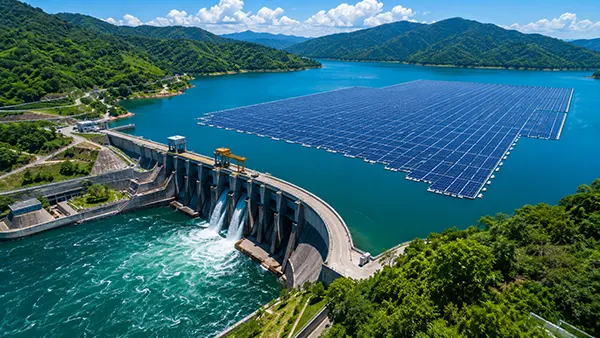
Anchoring systems represent one of the most technically demanding aspects of project development. Depending on the depth and characteristics of the water body, engineers may use bank anchoring, bottom anchoring or hybrid systems. Reservoir projects connected to hydroelectric dams often require dynamic anchoring capable of adapting to significant water level variations. Poor anchoring design can lead to structural displacement, cable damage and increased maintenance costs, which is why engineering studies remain critical during early planning stages.
Electrical infrastructure also differs from conventional solar farms. Floating systems require waterproof cabling, floating inverters or protected electrical platforms, along with enhanced insulation standards. Maintenance teams must use specialised equipment to access the arrays safely. By 2026, manufacturers have introduced robotic cleaning technologies and remote monitoring systems that reduce operational risks while improving long-term performance analysis for utility-scale projects.
Environmental Benefits and Potential Ecological Risks
Floating solar technology is often promoted as an environmentally responsible solution, particularly when installed on artificial reservoirs or industrial water bodies. These projects may reduce pressure on forests and agricultural land that could otherwise be cleared for large energy developments. In addition, pairing floating solar arrays with hydropower facilities allows operators to share transmission infrastructure, reducing construction costs and minimising additional environmental disturbance.
Another environmental advantage involves water preservation. Research from projects in China, Spain and the United Arab Emirates shows measurable reductions in evaporation rates after partial reservoir coverage. In drought-prone regions, this benefit may become increasingly important as climate change intensifies water scarcity challenges. Some water utilities now consider floating solar technology part of broader climate adaptation policies rather than simply an electricity generation method.
Despite these advantages, floating solar systems may also create ecological concerns if poorly planned. Excessive shading can affect aquatic ecosystems by reducing sunlight penetration necessary for algae and underwater vegetation. Changes in water temperature and oxygen levels may influence fish populations and biodiversity patterns. Environmental assessments therefore play a major role before construction begins, particularly on natural lakes and ecologically sensitive wetlands.
Operational Challenges and Long-Term Risks
Severe weather remains one of the largest operational risks for floating solar projects. Strong winds, hurricanes and heavy storms can damage floating structures or disrupt anchoring systems. In 2022 and 2023, several Asian projects reported partial structural failures after extreme weather events, prompting engineers to strengthen design standards for wave resistance and emergency shutdown procedures. By 2026, insurance companies increasingly require advanced climate risk assessments before financing large installations.
Corrosion and humidity create additional technical challenges. Electrical equipment installed near water faces higher exposure to moisture, salt and condensation. Components must therefore meet stricter durability standards than equivalent land-based systems. Although maintenance costs have gradually decreased due to technological improvements, floating projects still require more specialised inspection procedures and safety protocols compared with conventional photovoltaic farms.
Economic uncertainty can also affect project viability. Floating solar systems generally involve higher initial investment costs because of specialised materials, marine engineering requirements and waterproof electrical infrastructure. Financial success depends heavily on local energy prices, government incentives and long-term maintenance planning. In countries without stable renewable energy policies, developers may hesitate to invest in large floating photovoltaic facilities despite the technology’s growing global reputation.
Major Floating Solar Projects Operating in 2026
China continues to lead the floating solar sector in total installed capacity. One of the best-known examples is the massive floating photovoltaic complex in Anhui Province, built on flooded former coal mining land. The project combines large-scale solar generation with grid modernisation initiatives aimed at reducing dependence on coal-fired electricity production. Chinese energy companies continue expanding similar projects on industrial lakes and hydropower reservoirs across several provinces.
India has also emerged as a major market for floating solar development. The Omkareshwar Floating Solar Project in Madhya Pradesh represents one of the country’s most ambitious renewable energy initiatives. Designed to support regional electricity demand while reducing land acquisition conflicts, the project forms part of India’s broader strategy to expand renewable generation capacity before 2030. Several state governments now prioritise floating solar installations near existing hydroelectric infrastructure.
Europe has increased investment in floating solar technology as part of wider decarbonisation programmes. The Netherlands operates multiple reservoir-based solar farms integrated into local energy networks, while France and Portugal continue testing hybrid systems combining floating solar arrays with hydroelectric generation. In the United Kingdom, water utility companies have adopted floating solar systems on drinking water reservoirs to lower operational electricity costs and improve sustainability targets.
How Floating Solar Could Shape Future Energy Systems
Energy analysts increasingly view floating solar as a complementary technology rather than a replacement for traditional solar farms. Hybrid energy systems combining hydropower, battery storage and floating photovoltaics may improve grid stability while supporting flexible electricity production during periods of high demand. Reservoir-based projects are particularly attractive because transmission infrastructure often already exists, reducing development complexity.
Technological innovation continues to reshape the sector. Manufacturers now develop bifacial solar panels specifically designed for water environments, allowing systems to capture reflected sunlight from the water surface. Artificial intelligence is also becoming more important for predictive maintenance, weather forecasting and performance optimisation. These developments may gradually reduce operational costs and improve reliability over the next decade.
By 2026, floating solar power plants represent one of the fastest-growing segments of the renewable energy industry. Their future expansion will depend on engineering quality, environmental regulation and long-term financial stability. While the technology still faces technical and ecological challenges, real-world projects already demonstrate that floating solar systems can contribute meaningfully to global electricity production while helping countries address land limitations and climate objectives.